Skip to Main Content
Brown University
School of Public Health Brown University

Long-Term Care Quality & Innovation Lab

Search Menu

Site Navigation

  • Home
  • About
    • Connect With Us
  • Our Work
  • Resources
    • RAPT model
    • Infection Tracking Logs
    • Infection Control Amplification in Nursing Centers
  • Team
    • Staff
    • Emeritus Advisory Council
  • Events
    • Past Events
  • Announcements
    • All Announcements
    • Issue Briefs
Search
Long-Term Care Quality & Innovation Lab
Date March 1, 2025
All News
Share
Facebook Twitter_X Linkedin Email

Exploring Physical and Emotional Benefits of an Exercise Program for Older Adults in an Assisted Living Community

By Olivia Taylor, Ann Reddy, MPH, Rosa R. Baier, MPH, and Ellen McCreedy, PhD

This issue brief presents findings from a research partnership between Brown’s Center for Long-Term Care Quality & Innovation (Q&I) and Meridian Senior Living. Q&I was established at the Brown School of Public Health with a gift from the American Health Care Association/National Center for Assisted Living (AHCA/NCAL), which represents nursing homes and assisted living communities across the U.S.

Meridian and Q&I established a research partnership grounded in our shared goal of elevating the quality of care for older adults. The Brown University School of Public Health's Community-Academic Research Partnership Fund, which promotes partnerships between local community organizations and researchers at Brown, supported this work.

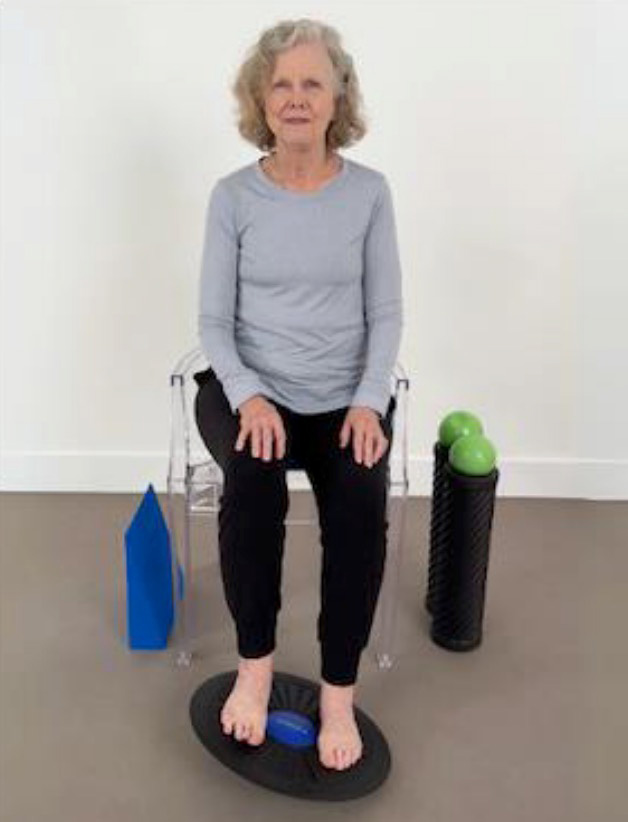
Meridian provides life enrichment programming and memory care services in residential long-term care facilities spanning 21 states, including Rhode Island. Chapel Hill Senior Living, in Cumberland, RI, offers a seated exercise program called Rev6. The program is designed to improve older adults’ mobility and balance. With 30% of older adults experiencing at least one fall per year, maintaining physical activity and strength is important to avoid injury.
Key Findings:

  • Residents participating in the exercise program reported an array of physical and emotional benefits.
  • Both residents and staff stated that those in the class had reduced chronic pain, increased muscle strength, and more confidence when walking.
  • Both residents and staff expressed their preference for live in-person teaching of the class.

Rev6 is delivered via Zoom video conferencing at Chapel Hill twice a week. Residents and staff members meet in the Chapel Hill gym and the necessary equipment is set up before class for each resident.

Through a TV at the front of the room, the exercises are demonstrated live by an instructor. All residents can see the TV and hear the instructor. In addition to the instructor, two staff members walk around the room to provide feedback, modifications, or encouragement.

The goal of this project was to identify resident- and staff- prioritized outcomes for a future efficacy trial of the Rev6 exercise program.

Methods

rev6.fitTwo researchers (AR and EM) attended three regularly-scheduled Rev6 exercise program classes, each with between seven and 10 older adult residents at Chapel Hill.

Immediately after the third class, we held a focus group with participating residents. We also conducted two 30-minute interviews: one in-person interview with a Chapel Hill staff member and one virtually (via Zoom) with two Meridian corporate leaders.

We recorded and transcribed the focus group and interviews. Three researchers (AR, OT, and RB) then analyzed the transcripts to identify themes about the perceived impact of the program on participants and feedback regarding the classes.

Sample

  • Seven Chapel Hill residents participating in Rev6
  • One Chapel Hill staff member responsible for Rev6’s delivery at Chapel Hill
  • Two Meridian corporate leaders

Improved Wellbeing

Residents and staff described improved self-esteem and confidence due to participation in the program. Participants attributed the benefits of an improved mindset to the sense of community they gain

And I think that one of the things that this does is to kind of appreciate how we look at ourselves and how we see, what we would like to be, and then gives us a trail to get there.

Chapel Hill Resident

…it’s an increase in self-esteem and confidence from the class

Meridian Leader

And also, social. People forget the social, the brain health and the social. Saying, ‘Hey, I'm looking forward to coming to this class, and medicine's movement.’

Chapel Hill Staff Member

I'll show up and they're nice people... So it's enjoyable. It's hard work, it's not easy. It's been friendly people and something nice to do

Chapel Hill Resident

Improved Physical Health

Residents and staff discussed how the program improved physical mobility and strength.

Younger. Younger. Always to be able to keep moving. Every type of moving, from our fingernails to our toenails and everything in between.

Chapel Hill Resident

I have a spinal stenosis, and I get a lot of pain, a lot of jabbing pains and all that. I've done shots, I've done physical therapy, and this is the best. Since I've been coming here, I noticed reduced pain. The sharp pains have reduced.

Chapel Hill Resident

I watch people walk a little bit with more confidence, and I see that they’re doing more walking and fitness because they’re not afraid that they’re going to fall.

Chapel Hill Staff Member

Preference for Live Teaching

Staff described the challenge of delivering the program with virtual instructors. These issues can include a glare on the screen or hesitation from the participants to ask virtual instructors for assistance.

Residents expressed a preference for live in-person classes vs. virtual classes. Chapel Hill staff expressed that participants of the Rev6 program may need extra help with correct form and posture in the program and classes delivered with in-person instructors provide residents with adequate one-on-one instruction.

The residents can say something to the instructor virtually. Sometimes the residents don't want to do that.

Chapel Hill Staff Member

I do think that teaching in front of them and live is better.

Chapel Hill Staff Member

Summary

Rev6 is a feasible, acceptable, and potentially-beneficial program for older adults in assisted living.

Residents noted an increase in self-esteem, confidence, and a better outlook on life after participating in the program. Both residents and staff relayed that participation gave residents more confidence in their walking ability, aligning with the program goal of increasing strength and balance.

In terms of program delivery, residents and staff also expressed a preference for live in-person classes vs. the current remote delivery. They mentioned that in-person classes may increase both the physical and social benefits of the exercise program, potentially enabling greater engagement and better physical form when performing the exercise movements.

The research team will use these preliminary findings to design a study that measures outcomes identified by participating residents and staff as important, such as physical activity and connection.

Brown University School of Public Health
Providence RI 02903 401-863-3375 public_health@brown.edu

Quick Navigation

  • Newsletter
  • Visit Brown
  • Campus Map

Footer Navigation

  • Accessibility
  • Careers at Brown
Give To Brown

© Brown University

School of Public Health Brown University
For You
Search Menu

Mobile Site Navigation

    Mobile Site Navigation

    • Home
    • About
      • Connect With Us
    • Our Work
    • Resources
      • RAPT model
      • Infection Tracking Logs
      • Infection Control Amplification in Nursing Centers
    • Team
      • Staff
      • Emeritus Advisory Council
    • Events
      • Past Events
    • Announcements
      • All Announcements
      • Issue Briefs
All of Brown.edu People
Close Search

Exploring Physical and Emotional Benefits of an Exercise Program for Older Adults in an Assisted Living Community